
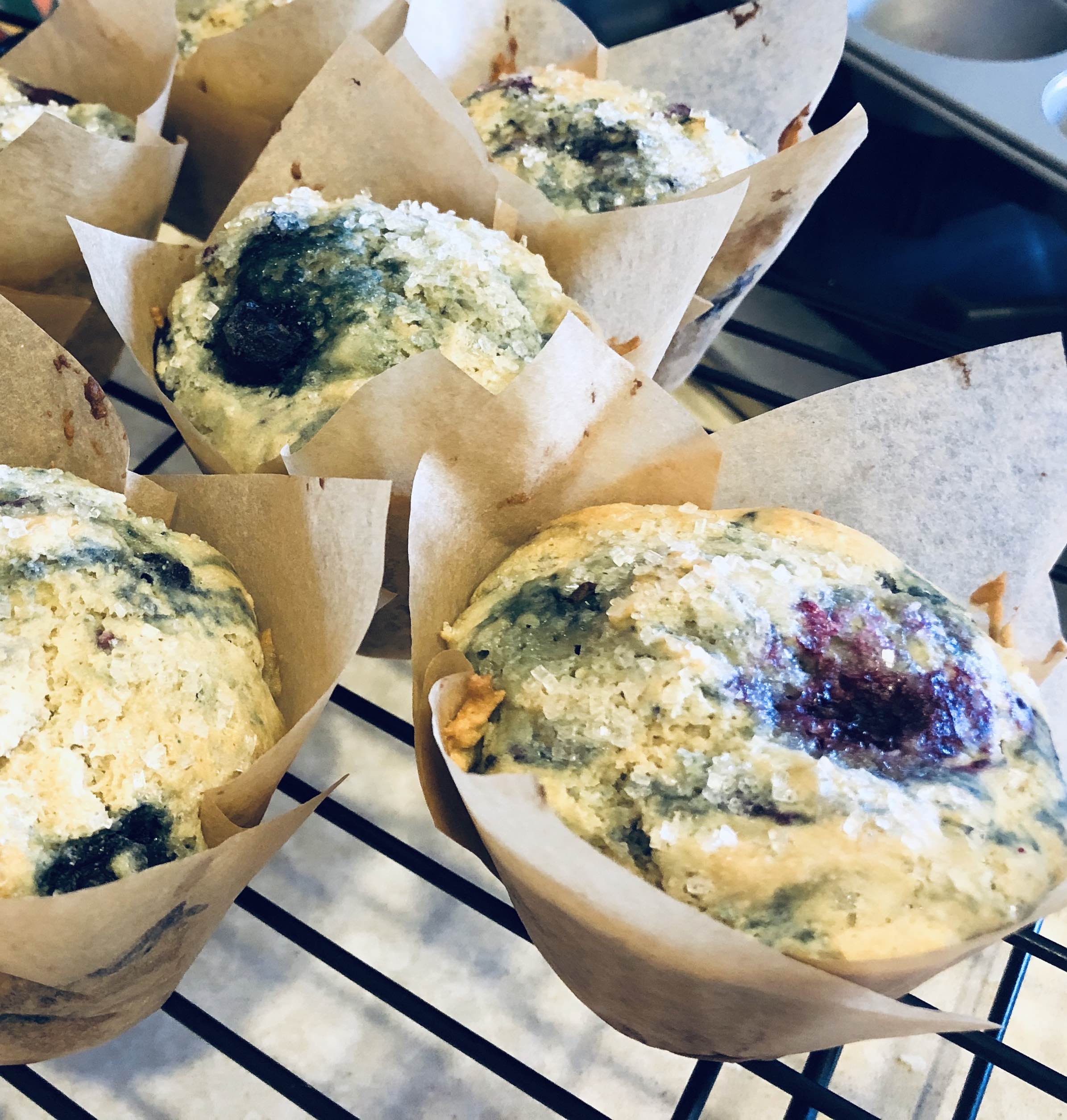
Whether you make your own gluten-free flour mix or buy one, it’s easy to make really tasty muffins. You just need a fool-proof recipe! I’ve been making gluten-free muffins since about 2007, when my daughter was first diagnosed with a gluten and dairy sensitivity. I put my best foot forward and figured out the perfect combination of ingredients to create a moist and flavorful product.
Flour Blends
Let’s start with the flour blend. I prefer to use my own mix that I blend. Currently, the mix I make consists of (think of the parts as cups but you can easily make more/less):
- 2 parts superfine brown rice flour
- 1 part superfine white rice flour
- 1 part sweet rice flour
- 1 part tapioca flour
- 1 part potato starch
For more information about how I mix and store it, go to this page. To be honest, I use a variety of flour blends; it all depends upon what I’m making. I just don’t think there really is a flour blend for EVERYTHING. But that’s just me.

Gluten-free Muffin Tips
There are a few tips, though, that are important to follow with gluten-free baking. Here are my suggestions:
- Tip #1: Mix the dry ingredients in a large bowl first. Mix the wet ingredients in a medium bowl. Add wet to dry. This is generally always the process with baking. Use a spatula to make sure all of the dry ingredients are incorporated, especially from the bottom.
- Tip #2: If you use a pre-made flour blend, make sure to look at the ingredients. For example, if the flour mix already has xanthan gum, you don’t need to add that to the recipe.
- Tip #3: You can vary the sugar based on how sweet you want the muffin to be. I usually use just over ½ cup which seems to be perfect. Over ¾ cup is too sweet for me.
- Tip #4: For easy and consistent portioning when making muffins, use a hinged-type ice cream scoop (also known as a scooper). These can be found at restaurant supply stores in different sizes.
- Tip #5: Always test muffins 1 to 2 minutes before the recommended time in case your oven is hotter than normal. Instead of using a toothpick to test for doneness, press your finger into the muffin. When it springs back, it’s done. If it leaves an indentation, continue to bake and test in 1 to 2 minute intervals.
Substitutions
Next let’s talk about ingredients and substitutions. Instead of regular milk, you can use a thicker milk substitute like almond or coconut. I think rice is too thin and I personally don’t use soy milk (sore belly). Instead of butter, I use a butter substitute or vegetable oil. Top tip: use a little less shortening when subbing for butter. Here’s why.
For eggs, I did a whole post on which egg substitute to use when and why. That post is here. Feel free to add less sugar, use honey, maple syrup or maple sugar. It’s not a very sweet muffin so use your judgement if you adjust it.
I hope these tips have helped. If you need a great gluten-free blueberry muffin recipe, check out this link!
Leave a Reply